Cortex Cloud surfaces risks across posture, identity, data, and runtime in a single platform. Closing those findings across thousands of resources safely at production scale is a different problem entirely.
Cortex Cloud surfaces risks across posture, identity, data, and runtime in a single platform. Closing those findings across thousands of resources safely at production scale is a different problem entirely.
Palo Alto Networks built Cortex Cloud (the evolution of Prisma Cloud) to give security teams unified visibility from code to cloud to SOC. Precision AI prioritizes risk, SmartScore ranks findings by real-world exposure and production behavior, and SmartGrouping consolidates related signals into cases instead of flooding teams with isolated alerts. These are strong foundations for any cloud security remediation program.
But the operational challenge typically shows up after detection. Every finding that needs a fix starts with the same questions:
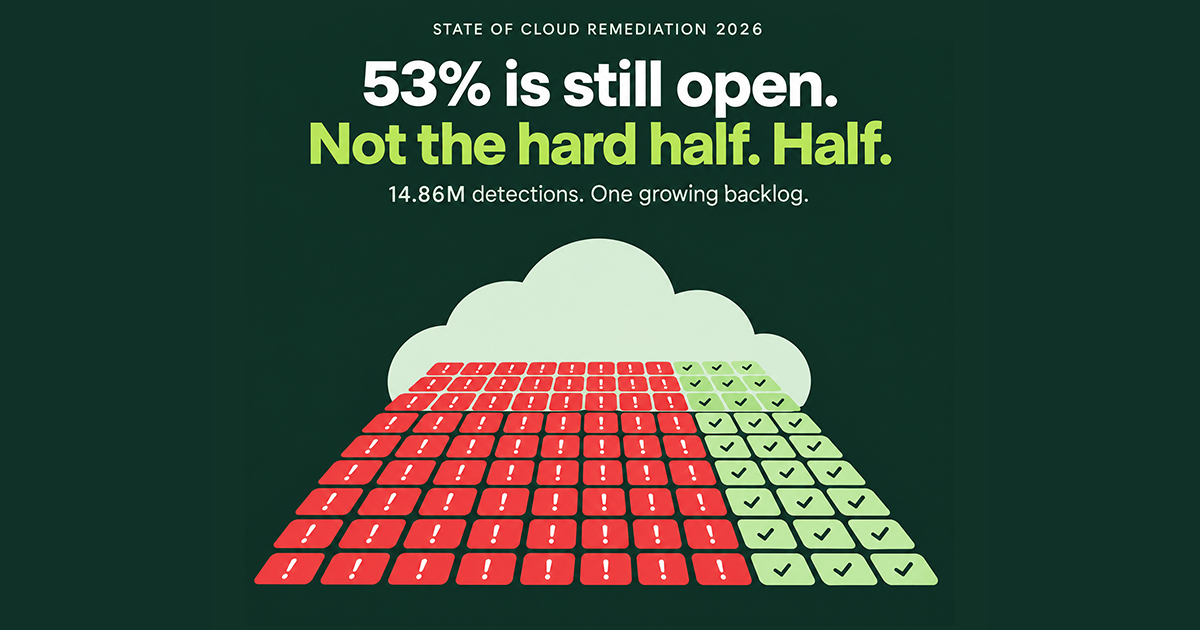
Answering those across hundreds or thousands of Cortex Cloud findings takes hours per issue. Tamnoon’s research shows that critical cloud misconfigurations remain unresolved for an average of 128 days, with fewer than 1% of those alerts leading to an actual fix.
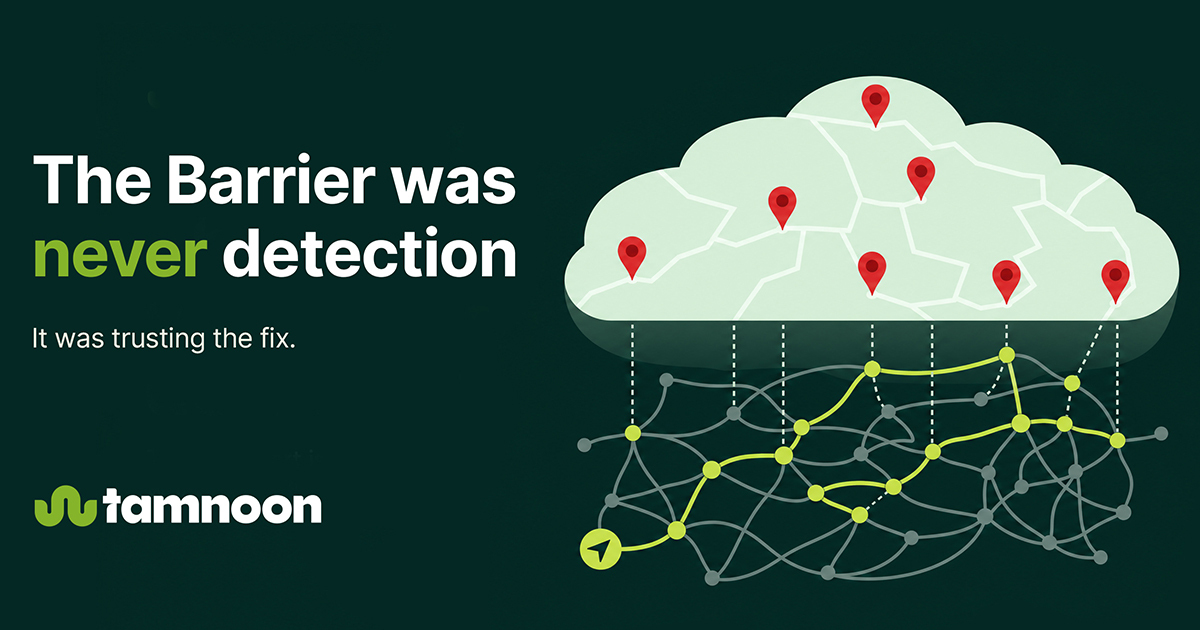
The most effective Cortex Cloud teams pair the platform’s detection and prioritization capabilities with a dedicated remediation for Cortex Cloud layer, one that brings expert oversight to high-risk actions, handles root-cause fixes with IaC updates, and prevents the same issues from returning.
Here’s how that works within Tamnoon’s agent-led, expert-supervised workflow.
Cortex Cloud gives security teams a unified CNAPP with broad coverage across cloud posture, workload protection, identity, data, and AI security. Key capabilities that shape operations for Cortex Cloud environments include:
Cortex Cloud gives teams a strong foundation from detection through prioritization. The question at scale becomes: how do you maintain consistent, validated fixes across thousands of findings and multiple cloud providers, with root-cause prevention and full audit trails, without adding headcount?
Cortex Cloud identifies, prioritizes, and contextualizes cloud risk. Tamnoon, powered by Tami, ensures those findings are fixed safely, in the right order, and at scale, with cross-CNAPP consistency and expert oversight built in.
Tamnoon’s integration with Cortex Cloud uses the Cortex Cloud API to ingest findings, including their severity, risk context, and affected resources. Once inside the platform, Tami converts raw findings into grouped initiatives, each enriched with the context teams need to act with confidence.
Most of this work happens outside production. Investigation, enrichment, safety analysis, and remediation planning are all read-only. The only moment production is involved is the final, validated remediation for Cortex Cloud execution step.
Here’s how Cortex Cloud findings move through Tamnoon’s workflow from open alert to verified fix, with each stage tied to real platform actions.
The example: Cortex Cloud’s CIEM capability flags several IAM roles with excessive permissions across an AWS environment. Multiple roles share a common over-privilege pattern, with wildcard actions granted on sensitive resources.
Tamnoon pulls Cortex Cloud findings via API and normalizes them into a common format. Findings are deduplicated across tools and grouped into initiatives by shared root cause or affected resource.
In this case, Cortex Cloud surfaces eight IAM roles with over-privileged permissions. Tami recognizes that several share a common pattern (wildcard actions on S3 and DynamoDB resources) and groups them into a single initiative rather than creating eight separate tickets.
The team’s queue starts with a manageable, prioritized initiative instead of a wall of individual alerts.
Cortex Cloud findings arrive with severity and risk context. Acting on them safely requires more. Tami runs read-only queries against live cloud APIs to build the full picture around each finding.
For each IAM role, Tami checks CloudTrail for actual API call patterns over the last 90 days. It maps which services and resources each role accesses in practice versus what the policy allows. Then it identifies whether each role is attached to production workloads or sitting idle. After that, it checks for cross-account trust relationships, confirms ownership through resource tags and IAM mappings, and flags any roles tied to automated pipelines or service accounts.
All of this is read-only. Nothing touches production. The output is a fully enriched initiative with enough context to answer the real question: is this safe to fix?
Most manual workflows apply the same response to every finding, regardless of what the evidence actually shows. Tami takes a different approach, running targeted investigative automations and assigning a Remediation Confidence Indicator (RCI) to each finding. The score updates as each investigation step adds new evidence.
Same over-privilege pattern, eight roles. Three different outcomes after agentic investigation:
Without progressive safety scoring, an analyst checking severity would likely treat all eight roles the same way. The RCI matches each finding to the response its evidence actually supports.
Related Content: How Agentic Cloud Remediation Workflows Work in 5 Steps
SAFE findings get parameterized remediation scripts generated from battle-tested playbooks. For the unused roles, Tami generates the policy revocation. For the SAFE roles with predictable usage, Tami produces a least-privilege policy rewrite, scoped to observed behavior, and pushes the change into IaC so the over-privilege can’t be redeployed.
RISKY findings get the same remediation plan, but with a human-approval gate. A CloudPro or the customer’s own team reviews the plan and the investigation context before execution.
UNSAFE findings are never auto-remediated by agentic remediation. The engineer receiving the finding gets the complete investigation, not a ticket that says “fix this IAM role.” They get exactly which actions are in use, which resources are accessed, and what a safe scope-down path looks like.
This is the one stage where the live environment is involved, and only for findings that have cleared investigation and safety assessment with an RCI attached. For most companies, this is how CNAPP remediation scales without introducing risk.
Deploying the fix is not the final step. Tami runs post-remediation scans to confirm each change applied correctly, and the Cortex Cloud finding is resolved. Drift monitoring catches regressions. Guardrails like Service Control Policies and policy-as-code rules prevent the same over-privilege from being reintroduced through future deployments.
The full audit trail captures the finding, the investigation context, RCI progression, the action taken, who approved it, and verification results. Teams operating under SOC 2, HIPAA, or similar frameworks get the compliance evidence they need without having to build it manually after the fact.
Related Content: How to Remediate Wiz Findings with Tamnoon
Cortex Cloud sees the risk. Tamnoon closes it. Together, they create a complete path from initial finding to verified fix, with every step investigated, validated, and documented.
Organizations running Tamnoon with Cortex Cloud reduce open exposures by up to 97% within 90 days. Investigation capacity increases by 25x. Findings that get fixed stay fixed, because prevention is built into the workflow.
Tamnoon plugs into your existing Cortex Cloud deployment and starts closing findings without adding headcount or replacing your current workflow. One API connection. Full remediation for Cortex Cloud from day one.
Start closing more Cortex Cloud findings with Tamnoon. Book a demo with one of our CloudPros today.