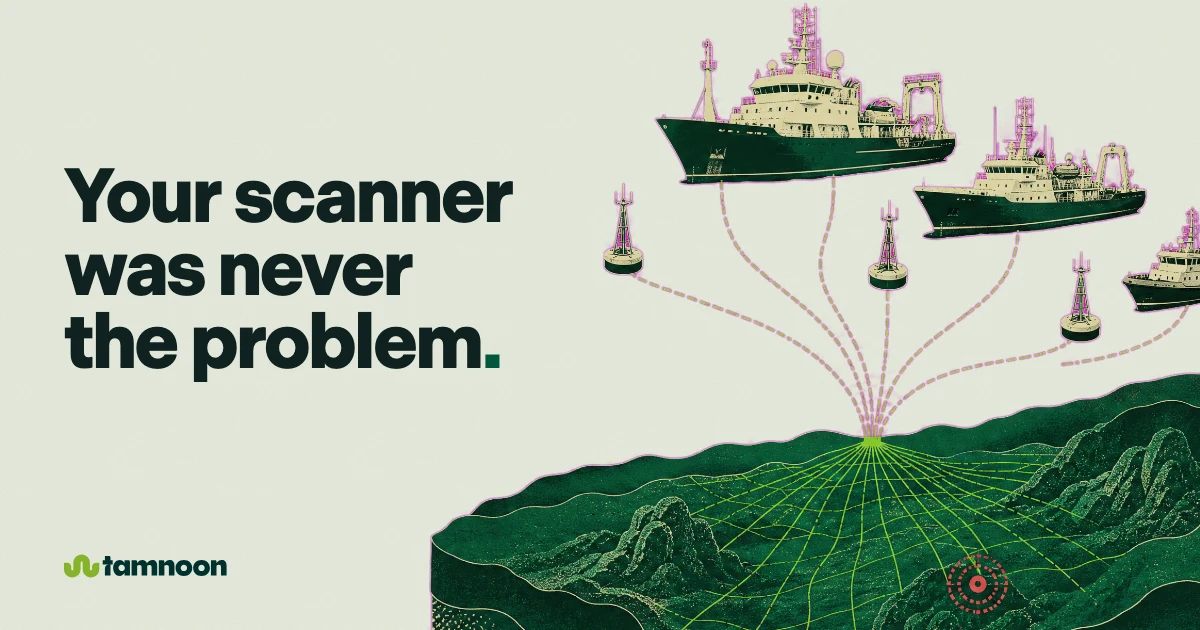
There is a button in your CNAPP that says Remediate. You have never pressed it. Not because you are slow. Because the last person who did closed a "public" bucket at 4:40 on a Friday. It was the origin behind the company website. He is a legend now.
So the queue grows. Across 800 cloud accounts, 53% of everything ever detected is still open, and a critical now takes a median of 150 days to heal, up from 128 last year. Not because nobody knows what to change. Because nobody can prove the change is safe, and the person who has to say yes is the person whose weekend it is.
In one sentence: Tamnoon is the self-healing engine for cloud exposures. It reads every finding from every scanner you run, gives it a verdict, closes what it can prove safe through your own change process, and declines the rest in writing, with the evidence.
The problem was never automation. It was automation that cannot say no.
Monday. Three tickets, one bucket. Wiz found it, Falcon Cloud Security found it, Defender found it. Nobody de-duplicated, because de-duplicating is a job and nobody has that job.
Tuesday. "Does anyone know what this instance does?" Forty-one replies in Slack, no answer. The owner tag says platform-team. Platform-team is two people now, and neither of them was here in 2022.
Wednesday. You tighten a security group in the console. Thursday at 02:00 the IaC apply opens it back up, and the finding returns with a fresh ticket number, as if you had never met.
Friday. The same eight misconfigurations you closed last quarter. A fifth of your queue, two years running. Closed as tickets. Reopened as drift.
It reads before it touches. Read-only, every time: who owns the resource, what depends on it, what changed last Thursday, what somebody already rolled back once. Then a verdict. Before any action.
SAFE. A proven route with the rollback attached. It runs on its own, through your change process, under your IAM, into your audit trail. Not a console click at 4:40.
RISKY. Declined, in writing, with the evidence and a manual path for the owner. This is the one no other tool will show you, because no other tool will say it.
AWAITING DATA. It names the one thing it could not establish and asks for it. It does not guess. Guessing is how legends are made.
The three-ticket bucket becomes one initiative; on average 142 alerts fold into one piece of work. The Thursday 02:00 re-open stops, because the change is written back to IaC and the next apply keeps it. And your no is remembered: override a verdict once, say why, and it judges that class your way from then on. You say it once.
The queue stops being the job. The yeses heal overnight. Your morning is the short list of no's, each with its evidence.
For security engineers
Read-only first. Write is earned.
Here is your one-pager.
Download the PDF →That did not go through. Try again, or write to [email protected].
One customer's quarterly reviews, four quarters running: 93% fewer new alerts arriving each quarter, and three times fewer open findings than when they started. One healthcare customer priced a single finding at $450 an hour of engineer time: $8,775 to close by hand, $775 through Tamnoon, eleven times cheaper. Their numbers, and they showed the arithmetic. Never averages. Ask for yours.
Can it refuse a change? Show one refusal, evidence attached.
When our engineer overrides it, where does that no go?
Does the change survive the next IaC apply?
Thirty minutes to connect, read-only. No access changes, nothing written. Hours later: verdicts on your real findings, what it heals tonight, what it refuses, and why. Read the refusals first. Week two, the first class heals on its own.
Everyone automates the yes. We mastered the no.
A second engineer who works your queue at 3 a.m. and writes nothing it cannot prove.
Auto-remediation is software that changes a cloud environment to close a security finding without a person making the change by hand. The risk is a change that breaks production. Tamnoon's version gives every finding a verdict first: SAFE runs through the customer's own change process, RISKY is declined in writing with the evidence, AWAITING DATA asks for the missing information.
Tamnoon's can. When it cannot prove a change is safe for the exact environment, it does not apply the change. It records a RISKY verdict with the evidence and a manual path for the owner. Refusal, with a written reason, is the difference between automation a security team can leave on and automation it turns off.
Watch mode is Tamnoon's read-only first phase. It connects to the scanners a team already runs and to the cloud with read-only access, nothing installed and nothing written, and within hours gives verdicts on the team's real findings: what it would heal, what it would decline, and why. Write access is granted later, per finding type, by the customer.
Teardowns, CTF write-ups and field notes from the people who close cloud findings for a living.
You're subscribed.
That did not go through. Try again, or write to [email protected].
At most one email a month. Unsubscribe from any of them.