MDR protects endpoints, not cloud workloads. Strengthen your cloud security with detection and response built for AWS, Azure, and GCP.

You invested in MDR to cut through the noise. So why does your SOC still feel buried?
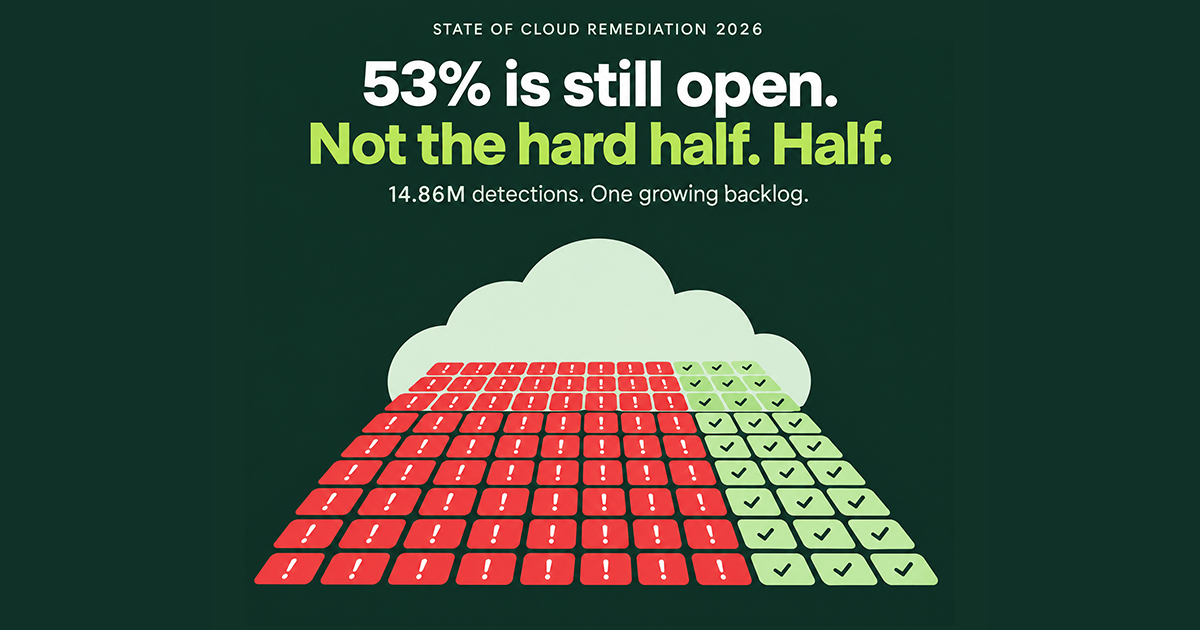
You’re familiar with the hundreds (or possibly thousands) of alerts. A backlog that never seems to shrink. And DevOps? They’ve learned to ignore half of what security sends their way.
It’s not your team’s fault. It’s the model.
Traditional MDR wasn’t built for the cloud. It was built for on-prem perimeters and office laptops.
But the world has changed. Your workloads are now scattered across AWS, Azure, GCP, and SaaS platforms, and attackers have adapted faster than your MDR ever could.
That’s why cloud breaches keep happening, even in organizations that pay for “round-the-clock monitoring.” MDR can’t cover what it can’t see. And in the cloud, that’s most of the real attack surface.
We analyzed over 4.7 million CNAPP alerts so you don’t have to. Here’s what we discovered.
Let’s give MDR credit where it’s due. It works well on the ground it was built for: spotting malware on laptops, catching lateral movement across office networks, and helping SOCs investigate suspicious activity in traditional IT.
But cloud security is a different battlefield today. The rules have changed, and MDR hasn’t kept up.
Here’s what it misses when the fight shifts to the cloud:
MDR can still shine in the environments it was designed for. But in the cloud, the blind spots are too big to ignore.
If you’re using MDR today, you probably see some value. You get 24/7 monitoring, help triaging incidents, and reports that keep leadership in the loop. On paper, that sounds like the coverage you need.
But when you move into cloud environments, the cracks quickly start to show. MDR wasn’t built for cloud-native infrastructure, and it struggles in ways that leave you exposed.
These are the cracks most MDR buyers discover the hard way:
MDR was built on endpoints and network logs.
It can catch a virus on a laptop, but it cannot detect a stolen API key used to log directly into your AWS console.
It misses misconfigured identities, SaaS hijacks, and container exploits, exactly the ways modern attackers break in.
In theory, MDR should reduce alert fatigue.
In practice, many providers just forward alarms from popular cloud tools with no added context.
SOC teams already receive on average 500+ investigation-worthy alerts per week, and nearly two-thirds of their time is consumed just trying to triage them.
The result? A firehose of low-value alerts your team still has to sift through. And surprise, surprise, nothing gets done because they end up getting ignored.
Too often, MDR works behind closed doors.
You don’t see how alerts are triaged, why actions were (or weren’t) taken, or even the raw logs.
That lack of transparency leaves your team blind to lessons learned and stuck waiting for updates.
MDR’s “guided response” sounds helpful. But in reality, it often means throwing tickets over the wall to DevOps, who are busy shipping features and don’t want to risk breaking production.
Security advice without context just becomes a backlog because no one knows what to do with it.
MDR analysts know endpoints and networks.
But cloud? That takes deep expertise in IAM policies, Terraform, Kubernetes, and SaaS integrations.
Most MDR providers don’t have that bench strength, and you end up paying for “experts” who can’t speak cloud.
That gap isn’t shrinking either. Industry reports show a global shortage of nearly 4 million cybersecurity professionals, with cloud expertise being the hardest skill to hire.
The gaps in MDR aren’t just technical. They have a real impact on your security posture and your business.
When MDR can’t keep up with the cloud, here’s what happens:
Sticking with MDR alone means living in a constant state of exposure. The more cloud you adopt, the more the gap grows, and the harder it is to dig yourself out.
So, what’s the solution? It starts with a new approach that’s focused on cloud-first detection and managed remediation.
The answer isn’t more alerts. It isn’t another dashboard. And it isn’t paying an MDR provider to throw tickets over the wall faster.
What cloud environments need is a model that was built for the cloud from day one, one that sees the right signals, adds the right context, and drives every issue to resolution.
Here’s what that looks like:
The outcome? Instead of drowning in noise, your team gets clarity. Instead of chasing alerts, you burn down backlogs. And instead of security stalling DevOps, both move faster together.
This is the shift from alerts to action, and it’s the only way to secure a cloud environment that never stops changing.
This confirms that our temporary credentials are valid and scoped to S3. The listing should show at least two objects: one marked public and one private.
Traditional MDR promised to cut through the noise, but in the cloud it amplifies it.
You don’t need more alerts. You need outcomes that change the security equation.
Tamnoon was built for the cloud from the ground up. We combine AI-driven scale with hands-on human expertise to give you context, confidence, and continuous progress against your cloud risk and growing alert backlog.
Here’s how we make that happen for you:
With Tamnoon, you move from inaction to action on your path to zero critical alerts. We help you overcome alert fatigue and turn security friction into a collaborative process that drives action.
Don’t settle for noise disguised as protection. See how Tamnoon turns alerts into action and exposure into resilience.
There’s always more to learn, see our resources center