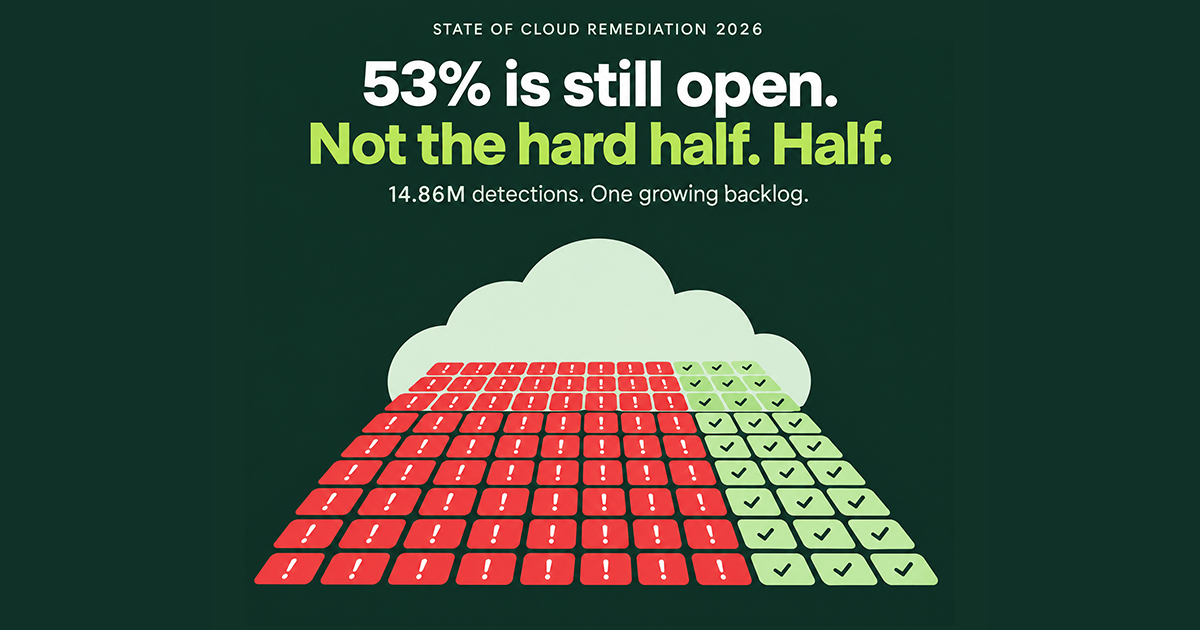
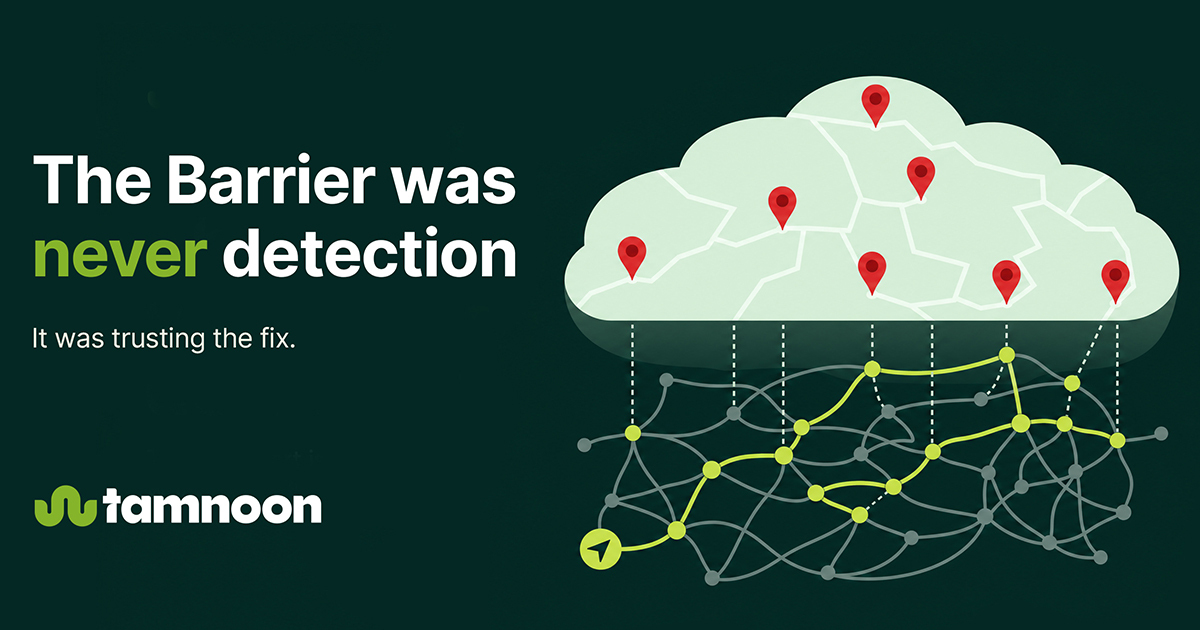
Zero production incidents should be the benchmark for any company looking at automated cloud remediation. That also happens to be the track record Tami has across every cloud remediation it has executed to date.
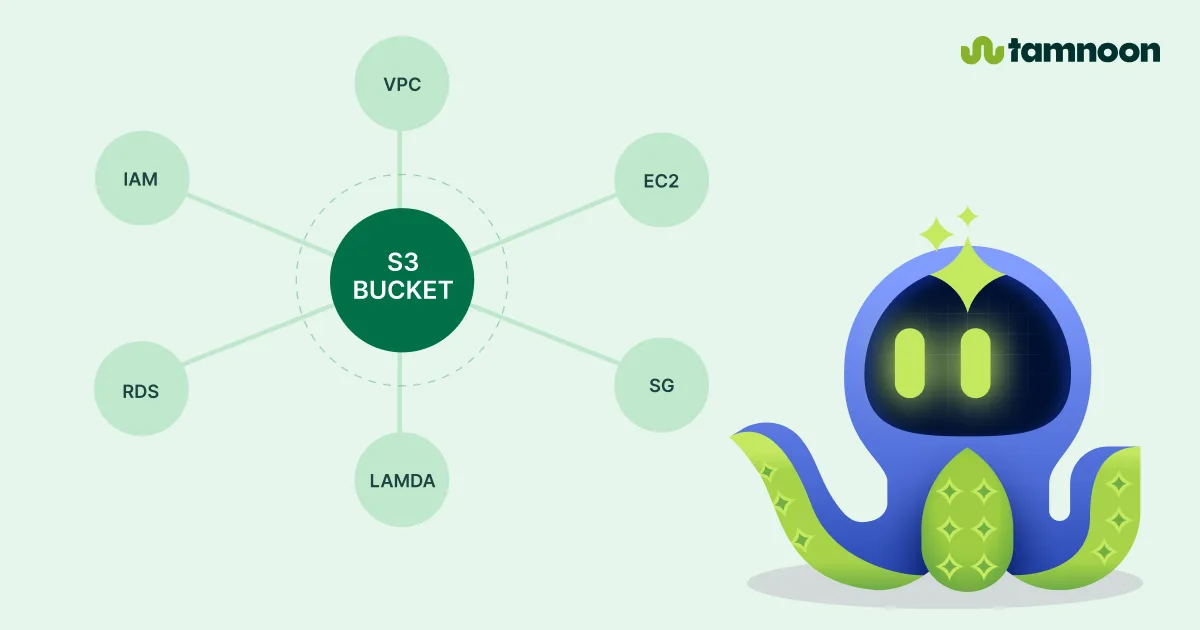
Zero production incidents should be the benchmark for any company looking at automated cloud remediation.
That also happens to be the track record Tami has across every cloud remediation it has executed to date. For security teams holding off on automation, it answers the only question that matters: will this break production?
What makes that track record possible? Three things:
Most automated remediation tools cannot actually deliver that combination at scale across security tooling.
In conversations with over 800 cloud security teams, the single most common reason CNAPP alerts stay open is not that teams don’t know about them. It’s that they’re afraid to fix them. The blocker is one specific question: will this break production?
A misconfigured network policy can sever application traffic, an IAM role removal can interrupt a running service, and a database encryption change can require infrastructure recreation. Every fix carries the possibility of an outage, and the closer the resource sits to a paying customer, the higher the stakes.
That is why “automated remediation,” as a category, is treated with skepticism. The default assumption is that automation means speed at the expense of safety. For most platforms on the market, that assumption is correct.
See how investigation, blast radius reasoning, and confidence scoring combine to make production-safe automation possible.
Three failure modes show up across every tool that has tried this and stumbled.
A CNAPP flags an S3 bucket missing HTTPS enforcement. The automation tightens the policy. The bucket serves a legacy mobile client over HTTP that still has 50,000 active users. By the time anyone notices, support tickets are already flooding the queue.
The fix was technically correct. The action was unsafe because it was applied without first checking what depended on the existing configuration.
Some platforms validate remediation by running it. If the change breaks something, they roll it back. This sounds clever until your rollback leaves a 90-second window where the application is down, your CDN has cached the broken response, and your error budget for the quarter is gone.
Production is not a test environment. Anything that treats it like one will eventually cause an incident.
Static severity ratings (”this CVE is critical, fix it”) don’t account for whether the resource is in production, whether it has dependencies, or whether the patch has known compatibility issues with the deployed runtime. Without that context, every alert gets the same treatment, and every fix carries the same blind risk.
Production-safe remediation reverses each of those failure modes. Three principles, applied in sequence.
That sequence is the architecture behind Tami’s Remediation Confidence Indicator, and it’s what the rest of this post is about.
The clearest way to see it is to watch the same alert produce three different outcomes.
Imagine a CNAPP flags three S3 buckets for the same policy violation: no HTTPS enforcement. Same severity, same finding, same recommended fix. After Tami investigates, the picture changes.
Same finding. Three different outcomes. That distinction does not exist in remediation tools that treat alerts as undifferentiated work items, and it is the difference between a fix that closes a ticket and a fix that closes a ticket without breaking your application.
There is a structural reason Tami has zero production incidents to date.
Across the full remediation workflow, only one stage actually changes anything in your environment: execution. Investigation, enrichment, blast radius analysis, and RCI assignment all happen against metadata, logs, and APIs. They never modify a resource, never create a test load, never simulate failure against your live workloads.
By the time Tami executes a fix, four things have already happened:
Production is touched once, with full evidence, after a confidence score justifies the action. Anything that cannot earn that justification doesn’t get auto-remediated. It gets routed to a human with the context they need to handle it.
Tamnoon publishes one number that summarizes the result of this approach: zero production incidents across the entire deployment history of the platform.
The other numbers follow from that one:
The headline isn’t speed. The headline is that speed is finally possible without trading away production stability. That is the unlock.
Automated cloud remediation is safe when the platform can prove the fix won’t break production, score every action with a defensible confidence rating, and keep production out of the investigation loop entirely. Tami was built to deliver exactly that. Tamnoon’s track record of zero production incidents is the proof.
If your team has been holding off on automation because the safety story didn’t add up, book a 30-minute demo. Bring your top 10 unresolved CNAPP alerts. We’ll show you which ones are safe to fix today, which ones aren’t, and exactly why.