Google Cloud Next 2026 made one thing clear: the cloud security industry is done pretending detection is enough.
Google Cloud Next 2026 made one thing clear: the cloud security industry is done pretending detection is enough.
The biggest announcements included:
Every announcement reinforced one clear message: the industry is moving from “finding” problems to “fixing” them, and that shift matters.
Here’s what happened, what it signals, and what CISOs should ask to see through the hype.
The security track at Next 2026 covered four areas, including detection and response, AI application protection, agent governance, and cloud platform security.
Google introduced three new AI agents in Google Security Operations.
The numbers behind the existing Triage and Investigation agent tell the story of where this is heading. Google reported it processed over 5 million alerts in the past year, compressing what used to be a 30-minute manual analysis into roughly 60 seconds.
Google also launched remote MCP server support for Security Operations (now GA), with an MCP server client available directly in the SecOps chat interface. On the intelligence side, dark web intelligence in Google Threat Intelligence entered preview, analyzing millions of daily external events with 98% accuracy to surface threats that matter. New partner-supported workflows from Darktrace, Gigamon, and SAP round out the SecOps ecosystem expansion.
Wiz, now fully part of Google Cloud, came in heavy. Its AI-Application Protection Platform (AI-APP), announced at RSA Conference, delivers risk posture and runtime analysis for AI applications across clouds and AI studios. Wiz Security Agents and Wiz Workflows add machine-speed identification and response for risks and threats. Tamnoon has been a Wiz integration partner since the WIN program launched and was recognized with Wiz’s inaugural WIN Partner Award for delivering managed remediation for Wiz findings across production environments.
So, how did Wiz expand multi-platform coverage? Some of the biggest announcements included:
On the development side, four capabilities stood out:
Google also rolled out controls for the agents themselves. These included:
Beyond the enterprise, Google launched Google Cloud Fraud Defense (the evolution of reCAPTCHA), designed to distinguish between bots, humans, and AI agents across the digital commerce journey. Chrome Enterprise added AI-aware extension threat detections (preview) and shadow AI reporting (GA soon) to give security teams visibility into unsanctioned AI usage at the browser level.
The platform security layer got updates across identity, data, and networking. Google simplified predefined IAM roles with streamlined administrator, editor, and viewer permissions.
Confidential Computing expanded with G4 VMs featuring NVIDIA RTX PRO 6000 Blackwell GPUs (preview) and C4 Confidential VMs with Intel TDX on 6th Gen Xeon processors (preview) for sensitive AI workloads.
A new Confidential External Key Manager (cEKM) entered preview, alongside quantum-safe key imports for post-quantum readiness. Secret Manager’s native integration with Agent Development Kit went GA.
On the network side, Cloud NGFW is getting an advanced malware sandbox (preview later this year) powered by Palo Alto Networks Advanced WildFire. Cloud Armor added new managed rules powered by Thales Imperva for Layer 7 application attack detection.
Security Command Center expanded its Standard tier to include data security posture management, compliance, vulnerability management, and risk analysis at no additional cost, while adding continuous discovery and posture management for AI agents, models, and MCP servers.
The volume of announcements is easy to get lost in. The signal underneath is more important.
Google, the largest cloud provider on earth, just made agentic cloud security a named category. Not a feature buried in a roadmap, but an entire product strategy with shipping code behind it. That changes the conversation for every CISO evaluating their security operations stack. Overnight, agentic security has become a baseline expectation in the cloud.
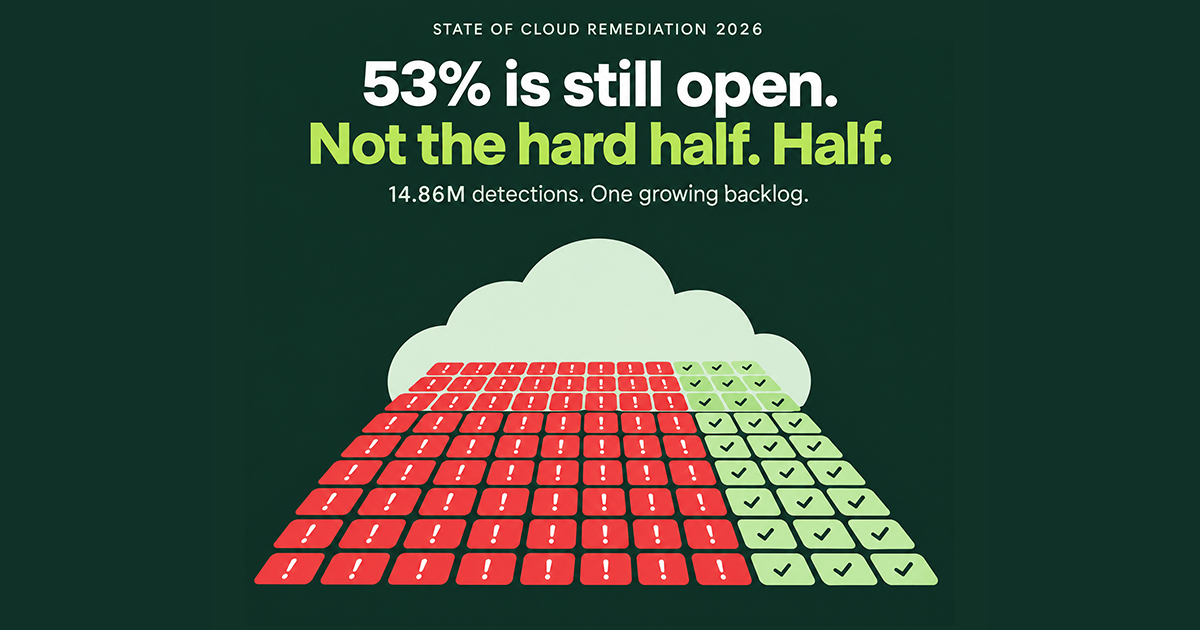
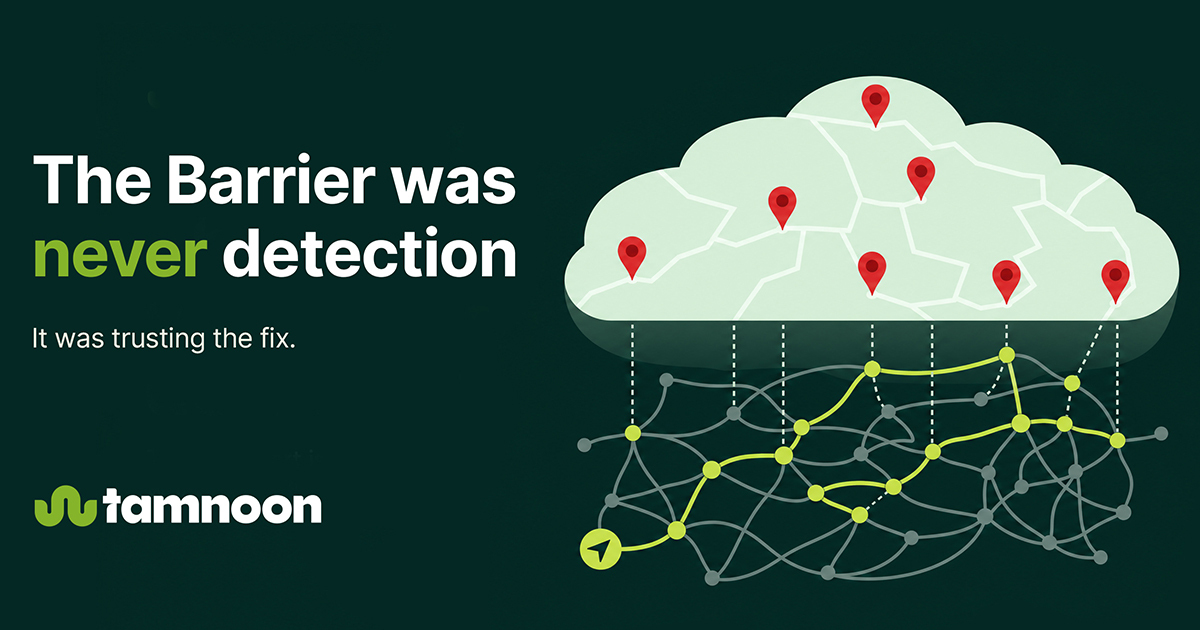
Wiz’s move into agent-based remediation is another important signal. For years, CNAPP vendors focused almost entirely on detection and visibility. Remediation was left to the customer. This shows safe remediation at scale is the focus now. Tamnoon’s own research confirms the urgency, with critical alerts still taking 128 days on average to remediate, even with modern CNAPPs in place.
But scope matters. Wiz Skills operates within the Wiz Security Graph, scoped to code-level and repository-level fixes. That’s valuable for dev-driven remediation workflows. Infrastructure-level agentic remediation across multi-CNAPP environments, with production safety controls and human validation before anything touches a live workload, is a different operational problem, something Tamnoon was uniquely built to handle.
The distinction comes down to how these layers interact. Detection platforms are getting better and better. Agent governance is getting formalized, agentic cloud security is becoming real, and the teams responsible for closing the gap between what gets found and what gets fixed still need a dedicated remediation layer that works across their entire stack, not just one vendor’s graph.
The agentic security wave will bring a flood of vendor claims over the next 12 months. Every CNAPP, SIEM, and SOC platform will add “agentic” to their messaging.
Before committing budget, CISOs should pressure-test any CNAPP remediation or agentic remediation offering against a few baseline questions:
Google Cloud Next 2026 confirmed that detection is no longer the industry’s ceiling. It’s now the floor.
The world’s largest cloud provider is building agentic capabilities into its security stack, and Wiz is adding remediation to what was once a detection-first platform. The category has shifted.
But for CISOs running complex, multi-CNAPP environments with production workloads that can’t afford downtime, the question remains the same. It’s the same question it’s always been: who’s actually fixing the things your tools find, and can you prove it’s working?
Tamnoon customers are already answering that question. Agent-led, expert-supervised remediation across CNAPPs, with safety controls before anything touches production, and zero production incidents across millions of managed workloads.
Reduce your open exposures by up to 90% within 90 days, across every CNAPP in your stack, without adding headcount. Book a demo to see how agent-led, expert-supervised remediation works in your environment.