CNAPP is now the default cloud security category. The old labels (CWPP, CSPM, CIEM) haven’t disappeared, but they’ve collapsed into unified platforms that handle posture, workload protection, identity, and detection and response under one roof.
And yet, the real question isn’t “can your tools find problems?” It’s what happens after they do.
Choosing the right one depends on where your team needs the most help.
Here are 9 CNAPP platforms shaping the market right now, plus two DSPM-focused solutions worth knowing about.
The short answer: everything moved from passive to active. Here’s a quick breakdown of what that means:
| Layer | Pre-2025 | 2026 Standard |
| Visibility | Periodic API scanning | Real-time eBPF-powered runtime fabric |
| Vulnerability Management | Raw CVE scanning with high noise | Risk-based prioritization with attack path analysis |
| Identity Security | Static IAM monitoring | Real-time Identity Threat Detection and Response (ITDR) |
| Response | Manual triage and ticketing | AI-driven remediation with human review |
| Compliance | Quarterly audit snapshots | Continuous real-time evidence (DORA, EU AI Act) |
The hybrid architecture debate is settled, too. Agentless handles posture. eBPF-based agents handle runtime. Most leading CNAPPs now offer both.
Each provider is presented with a focus on its core capabilities and the organizations that tend to benefit most from it.
Prisma Cloud is now Cortex Cloud. The February 2025 rebrand merges Prisma Cloud’s CNAPP with Cortex’s CDR engine into a single “code-to-cloud-to-SOC” platform.
Ideal for: Large multi-cloud enterprises and DevSecOps-mature teams that want CNAPP and CDR consolidated on one platform.
CrowdStrike Falcon Cloud Security is what happens when a threat intelligence company builds a CNAPP. The adversary-first approach sets it apart.
Ideal for: SOCs that need sub-second detection, teams extending EDR/XDR into the cloud, and orgs that want threat intelligence tied to real adversary behavior.
Microsoft Defender for Cloud’s edge is identity. Deep integration with Entra ID and Sentinel means workload security and identity governance live in one place, not two tools stitched together.
Ideal for: Microsoft-heavy enterprises, financial services under DORA, and orgs that want identity-first cloud security.
Orca pioneered agentless cloud security with its patented SideScanning, reading workload data directly from block storage without touching the workloads themselves. No agents, no performance impact, no coverage gaps.
Ideal for: Multi-cloud teams that need agentless-first coverage and environments where agent deployment creates operational or political friction.
SentinelOne’s story in 2026 is about proving rather than assuming. Its Offensive Security Engine with Verified Exploit Paths doesn’t just flag vulnerabilities. It proves they’re exploitable in your environment.
Ideal for: Orgs that want proof of exploitability rather than theoretical risk scores, hybrid environments needing real-time ITDR, and teams already running SentinelOne on endpoints.
Sweet Security’s “Runtime CNAPP” covers a surprisingly broad stack: CDR, CSPM, CWP, CIEM, ITDR, vulnerability management, API security, DAST, and DSPM. All through a single eBPF sensor.
Ideal for: SOC teams overwhelmed by false positives, orgs where alert fatigue is the primary bottleneck, and teams that want broad CNAPP coverage with runtime-first detection.
Sysdig is no longer just the Kubernetes runtime specialist. It’s now a Forrester Wave CNAPP Leader, one of only three to earn that designation in Q1 2026. Built on Falco, the CNCF runtime security standard Sysdig created, the platform now covers the full CNAPP spectrum with runtime as the foundation.
Ideal for: Kubernetes-heavy organizations, container-first teams, and SOCs that want runtime-rooted CNAPP with strong CDR capabilities.
Upwind is the fastest-growing CNAPP in the market. Frost & Sullivan named it 2025 Company of the Year in CNADR. Latio Tech’s 2026 report recognized it as both a Runtime Innovator and API Security Innovator.
Ideal for: Fast-growing cloud-native companies, teams that prioritize deployment speed and low overhead, and AWS-heavy enterprises wanting tight Security Hub integration.
Wiz earned the highest current offering score in the Forrester Wave CNAPP Q1 2026 report. The reason is still speed and clarity: a 100% API-based architecture that onboards in minutes.
Ideal for: Multi-cloud teams wanting fast time-to-value, orgs that need to discover and govern AI assets, and security teams that prioritize clear risk visualization.
Cyera is a pure-play DSPM that discovers, classifies, and protects sensitive data across cloud and SaaS. Starts with the data itself: where it lives, how it moves, who can access it. Deeper than CNAPP-embedded DSPM features for organizations where data governance is the primary concern.
Sentra focuses on finding sensitive data organizations don’t know they have: shadow data, abandoned stores, and untracked copies of production datasets. When the biggest risk is what you don’t know about, Sentra is built for that.
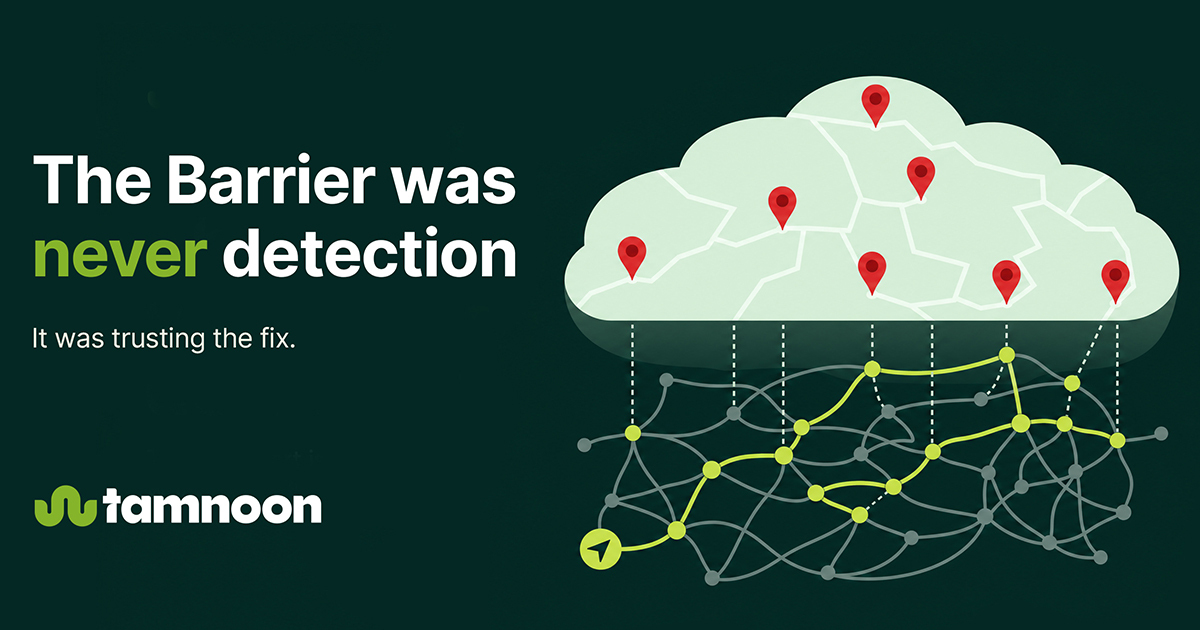
Every CNAPP on this list finds problems, and most find them fast, but finding isn’t fixing.
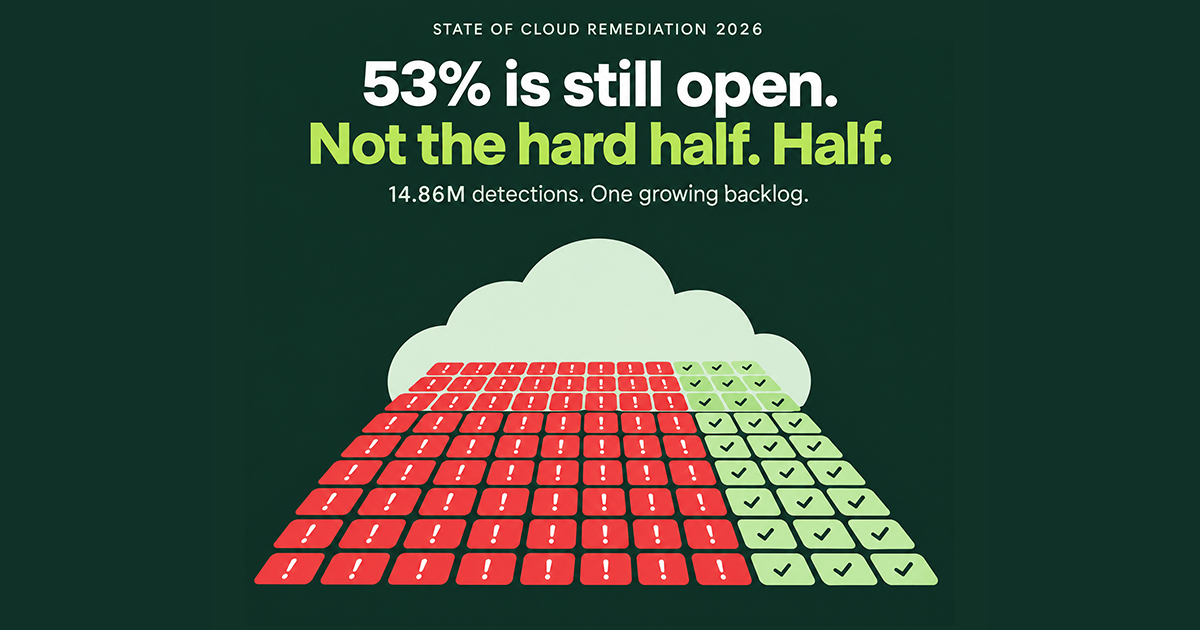
The gap between detection and remediation is where cloud risk actually lives. Your CNAPP surfaces thousands of findings, your team triages a fraction, and the rest sit in a backlog, aging into real exposure.
Tamnoon finishes what CNAPPs and cloud security tools start. We integrate with platforms like Wiz, Orca, and Cortex Cloud to prioritize, investigate, and safely remediate findings at their root cause. Our agent-led, expert-supervised approach consolidates thousands of alerts into focused initiatives, delivering up to 90% critical cloud exposure within 90 days, without additional headcount or broken production environments.
Your CNAPP finds problems. Tamnoon fixes them. Book a demo and see what your backlog could look like after Tami gets to work.