We get this question a lot: “Are we the right kind of company for a managed cloud security service?” And honestly, sometimes the answer is no. That’s not a red flag.

We get this question a lot: “Are we the right kind of company for a managed cloud security service?”
And honestly, sometimes the answer is no. That’s not a red flag. It just means your team, tooling, or priorities are in a different place.
Some companies have mature cloud security operations and just need better internal alignment. Others are buried in alerts and need a hand getting their CNAPP to do more than collect dust.
There’s no single path to securing the cloud. But if you’re wondering whether it’s time to bring in outside help, a few patterns tend to show up.
Before evaluating whether you’re a good fit, it’s worth setting expectations. A managed cloud security provider (MCSP, go ahead, tell Gartner we said it first) shouldn’t just be another layer in your tech stack. The right partner should extend your team’s capacity while helping you make faster, safer, more strategic decisions in the cloud.
Here’s what that should actually look like:
Fit isn’t about company size. It’s about where you are in your cloud journey.
The teams that get the most out of a managed cloud security service share a few patterns. If these sound familiar, you’re probably in the right place.
Maybe it’s Wiz, Prisma, or Orca. You’re bought in. But instead of driving risk reduction, the tool has become another firehose.
You need a way to operationalize your CNAPP with full-cycle remediation.
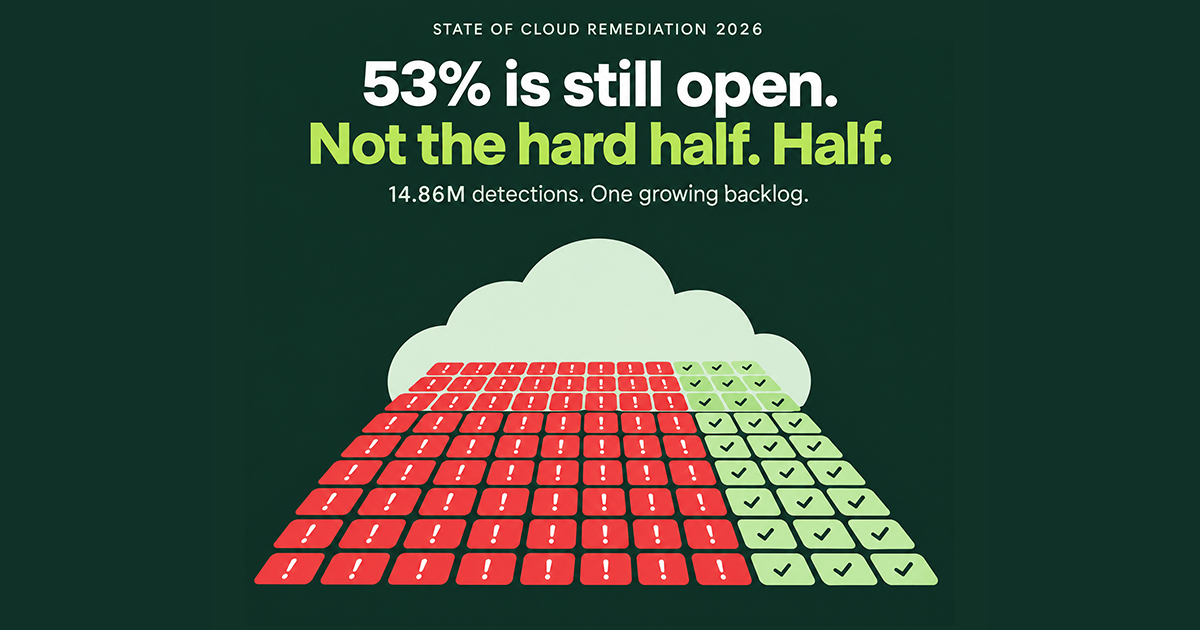
You’ve got signal, but no capacity.
Investigations drag. Context is often missing. It’s not that your team isn’t capable. Instead, it’s that there’s too much to handle without backup.
You’re not looking to outsource security entirely. Still, you’re looking for a partner, someone who integrates with your tools, extends your capacity, and works alongside your team to get things done faster and more effectively.
Your apps, infrastructure, and product live in the cloud. This isn’t a hybrid model with a few stray services. Cloud is your core platform, and protecting it isn’t optional.
Maybe you’ve got one cloud engineer trying to support 100 employees. Maybe it’s a two-person SOC with more alerts than hours in the day.
Either way, the ask is growing, and internal headcount isn’t. You need experienced support to ensure security remains effective without compromise.
You don’t need a pitch to understand the problem. You’ve seen it firsthand: alert fatigue, slow remediation, missed connections between findings.
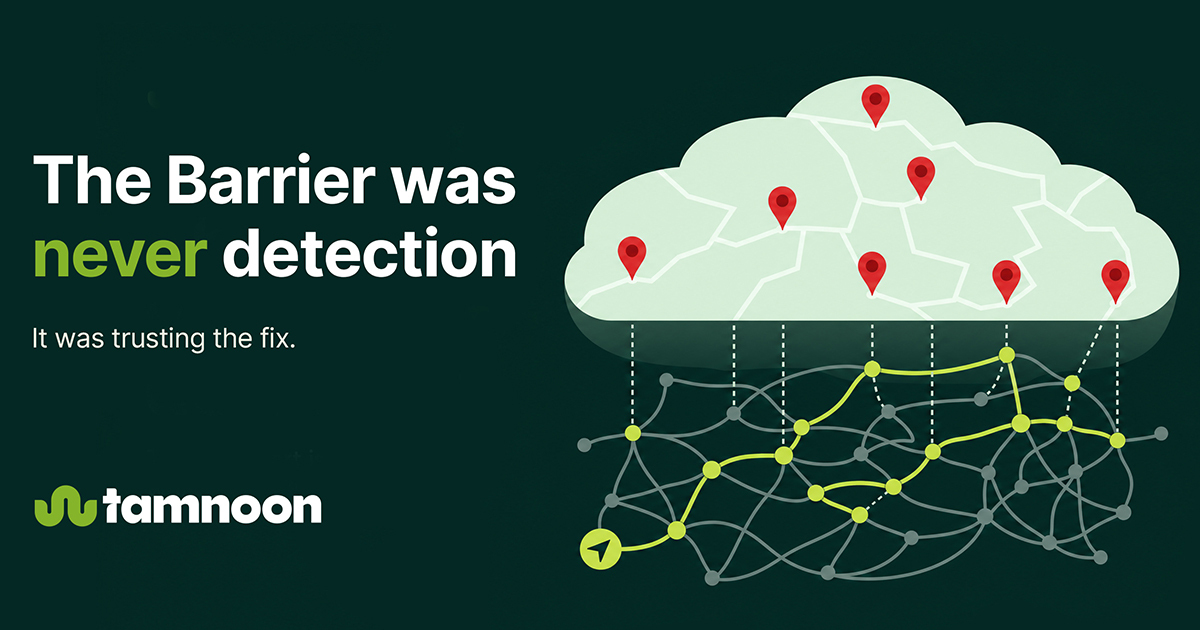
What you need now is clarity and progress backed by established processes that turn alerts into action.
Some industries feel the pain faster.
We see it all the time:
Sound familiar? In highly regulated industries with strict compliance and security requirements, you cannot afford to cut corners when it comes to security.
If a few of these rang true, there’s a good chance a managed cloud security partner would lighten the load, turning the chaos of alerts into structured, actionable insight and faster resolution.
See what’s possible when you partner with a managed CNAPP solution like Tamnoon.
There’s no shame in not being the right fit, sometimes it just means your team is in a different phase, your tooling isn’t there yet, or your internal approach is already working well.
If a few of these describe your situation, a managed service might not deliver the value you’re looking for right now.
Popular solutions or patchwork open-source setups might give you some signal, but without deep customization, those alerts tend to be broad and unactionable, creating even more noise, churn, and distrust. It also means there isn’t much for a service like Tamnoon to plug into.
After all, it’s hard to help prioritize and remediate what isn’t being surfaced consistently.
If cloud isn’t a core part of your infrastructure, then the ROI on a managed cloud security service will be limited.
These services are built to support fast-moving, cloud-native environments, not traditional networks with a few cloud side projects.
If you have cloud engineers and cloud application engineers working in your SOC, that’s a great leading indicator that your leadership is connected to the problem and has the vision to solve it in-house.
If your internal team is already covering detection, triage, and response with confidence, you may not need outside help.
We get it. Some orgs prefer to own everything in-house.
If you’re in the “no partners, no vendors” camp, then a co-managed model likely won’t align with your internal practices or risk tolerance.
If your environment isn’t producing alerts today, we won’t have much to work with.
You don’t need to be overwhelmed by alerts to benefit from managed services, but you do need some signal to start with.
We’ve seen setups where cloud environments are really just extensions of legacy networks in the cloud. This may include using VMWare for virtual machines, container orchestration platforms that run on-premise and in the cloud, or third-party tools to control network traffic.
If you’re not using cloud-native services, then a more traditional third-party MSSP might be a better option.
In these cases, visibility is limited and the value of a CNAPP-based approach drops sharply.
Sometimes it’s not about intent, it’s about scale.
If the spend on cloud tools and services doesn’t make sense for your business model or revenue, a managed service may be more than you need right now.
Don’t worry, this can quickly change as you grow or shift more to the cloud.
Even if a few of these sound familiar, that doesn’t mean you’ll never be a good fit.
It just means there may be other steps to take first, whether that’s investing in the right tooling, getting visibility in place, or scaling cloud usage to the point where support starts to make sense.
Even if the fit feels right, there are a few logistical factors that can make or break a successful partnership.
A 500-person company with heavy cloud workloads might be a better fit than a 5,000-person company still grounded in on-prem.
If your cloud footprint is significant (and growing), managed services make a lot more sense.
We work best with platforms like Wiz, Prisma, CrowdStrike, and Orca.
But that doesn’t mean we won’t support new tools in the future. You can see the full list of CSPM/CNAPP integrations we currently support.
Some teams have their cloud security dialed in. Others are buried in alerts, short on bandwidth, and stuck trying to make their CNAPP do more than raise alarms.
If you’re running a CNAPP, buried in signal, and ready for help prioritizing and remediating what matters most, you don’t have to keep pushing through on your own.
Tamnoon plugs directly into your existing tooling, works with your team (not around them), and helps you cut through the noise, fast.
Whether you’re trying to get to zero criticals or just need a better way to manage cloud exposure, we’re built for that. Learn more about how our process helps reduce your cloud exposure.
If it sounds like we’d fit right into your stack, let’s talk. And if not, keep us in mind. We’ll be here when the time’s right.