CNAPP alert prioritization is the practice of ranking cloud security alerts so teams fix the issues that carry the most business risk first, instead of working through findings by raw severity or in the order they arrive.
CNAPP alert prioritization is the practice of ranking cloud security alerts so teams fix the issues that carry the most business risk first, instead of working through findings by raw severity or in the order they arrive. Tamnoon handles this with Tami, an agentic AI Cloud SecOps agent trained on more than 14 million cloud alert remediations.
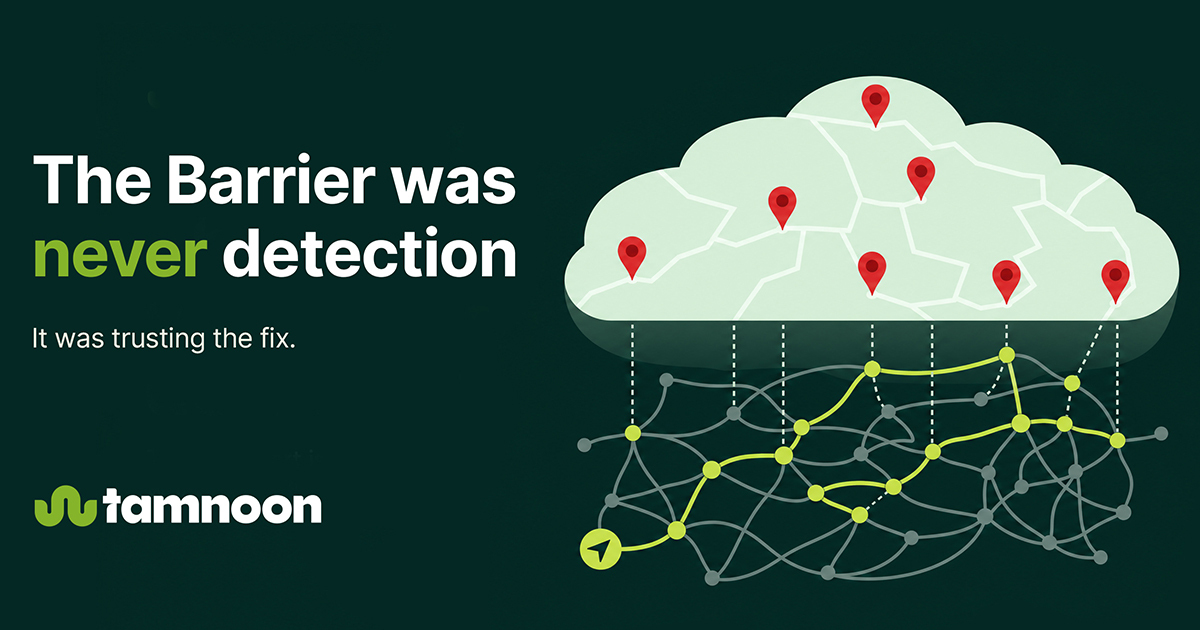
Tami groups thousands of CNAPP findings into a short list of risk-based initiatives, ranked by business impact, Crown Jewel asset value, and exploitability, and every decision is verified by Tamnoon’s human cloud security experts before it reaches your team.
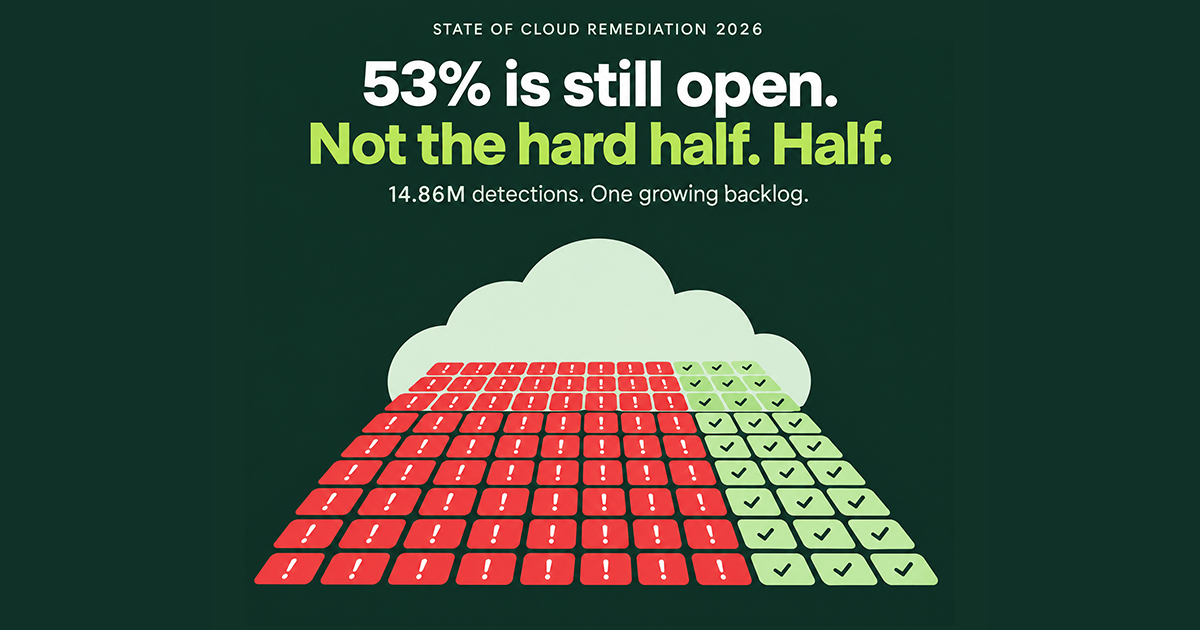
While CNAPPs have become an essential part of the modern cloud security toolkit due to their ability to detect misconfigurations, compliance issues, and threats across cloud environments, this comprehensive coverage that spans code, infrastructure, runtime, and more often results in a high volume of alerts.
Security teams need to decide which incidents to investigate first. Then, a further decision needs to be made when it comes to devoting ever-limited developer resources to remediation. This is the prioritization issue, which has become one of the main focal points for cloud security.
In this article, we’ll explore why traditional alert prioritization methods fall short and how machine learning techniques (with expert oversight) can provide a more effective solution for managing the growing volume of CNAPP alerts.
Organizations often start with manual triage or simple rule-based systems to manage CNAPP alerts. However, these methods quickly become ineffective as cloud environments grow.
The sheer volume of things that could go wrong in a cloud estate is hard to grasp. Hundreds of resources are deployed by different teams, often using a combination of manual and automated methods or managed by 3rd party providers. This complexity can lead to inconsistent security practices and an increased risk of misconfigurations slipping through the cracks.
For a mid-size organization, thousands of alerts per day would not be unusual. These could range from minor configuration issues, such as failing to encrypt publicly available data, to urgent problems that can lead to customer data exposure or exposed API keys. A manual review of each alert is time-consuming and impractical. Even with basic filtering, the number of alerts often exceeds what a team can reasonably handle.
Companies continually add new services, applications, and resources to their cloud infrastructure. This growth multiplies the potential security issues and subsequent alerts. Security teams, often working with limited budgets, struggle to keep pace.
But while cloud spend is seen as an unavoidable cost of modern R&D, organizations are averse to growing security headcount at the best of times. Financial pressures in recent years have led to further cost-cutting, forcing security teams to do more with less. This makes manual review and prioritization of each alert even less feasible.
Cloud environments involve intricate relationships between various components. A single vulnerability might have different levels of risk depending on the affected asset and its connections to other resources. Rule-based systems struggle to account for these complex relationships. They often lack the flexibility to consider:
Static rules can’t easily adapt to these dynamic factors. As a result, they may miss critical issues or generate false positives, further burdening the security team. For instance, a rule might flag all instances of unencrypted data storage as high priority but miss the nuance that unencrypted data in a tightly controlled internal development environment poses less immediate risk than in a public-facing production system.
Prioritization is essentially a big data problem. As such, it invites solutions based on artificial intelligence (AI) and machine learning (ML), which can simplify the process of sifting through incidents and finding the most important ones to tackle.
Our customers hire Tamnoon in order to help them manage their CNAPP, which includes streamlining the way they prioritize alerts and remediation. As part of our solution, we’ve introduced several ML-based techniques. However, our general approach is not to replace human expertise, but to enhance it. We believe AI should serve as a co-pilot, making security processes more efficient and allowing human experts to focus their attention where it matters most.
Our AI-driven systems are mostly designed to process vast amounts of data from CNAPP and other sources, using sophisticated algorithms to surface the most critical issues. However, algorithms alone are not enough; some of the most important inputs for prioritization are related to business impact, of the vulnerability and the remediation. Much of this information lives in people’s heads, in emails, or in various domain-specific knowledge bases (e.g., “What will be the impact of this dashboard not refreshing when we block the database it’s reading from?”). Taking these signals into account, something the security industry has historically been bad at, is only possible with the combination of humans and machines.
Additionally, on a practical level, even the most advanced models tend to have certain biases and failure states, which can lead to situations that most organizations would not be willing to accept (e.g., production environments crashing due to an AI model mistake).
While we do not shy away from using ML models, our service delivery team will always provide feedback, verify recommendations, and make final decisions when necessary. This hybrid approach ensures that we maintain high accuracy while benefiting from the speed and scalability of AI.
That co-pilot principle still holds in Tami: Tamnoon’s approach is agent-led and expert-supervised, pairing the speed of an AI agent with human verification on the decisions that carry production risk.
AI and ML are used to analyze, categorize, and prioritize CNAPP alerts, significantly reducing the workload on both security and development teams while improving the accuracy and relevance of prioritized issues. Our approach combines several ML techniques to process security data and provide actionable remediation steps.
By combining these advanced ML techniques with human expertise, Tamnoon’s approach to alert prioritization addresses the key challenges faced by modern cloud security teams. It allows organizations to effectively manage the high volume of alerts generated in complex, rapidly evolving cloud environments, ensuring that critical issues are addressed promptly while reducing the burden on security personnel.
Want to see agentic CNAPP alert prioritization in action? Explore the agentic prioritization platform, or schedule time with our team today.